
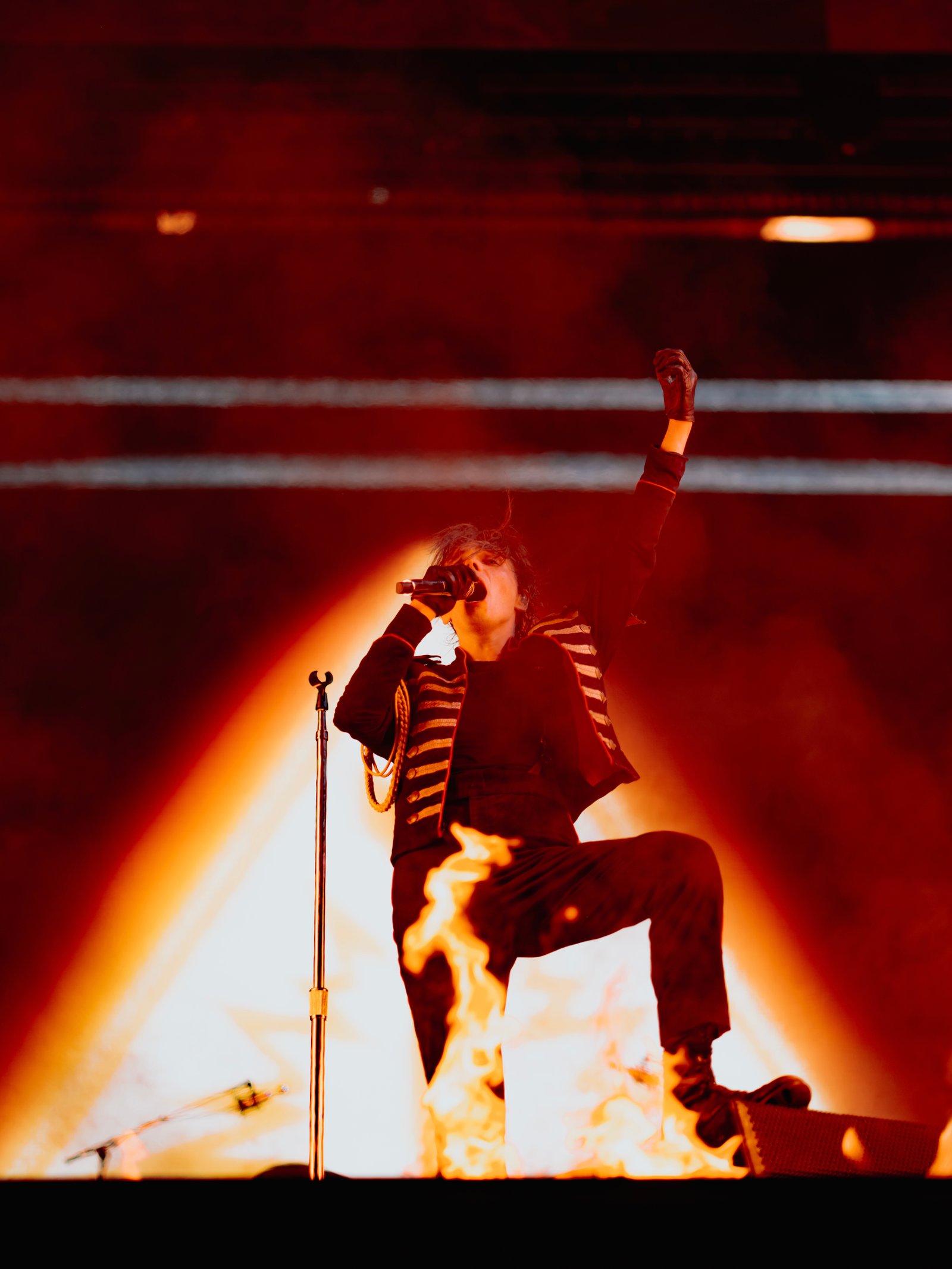
Photo Credit: Bryce Hall
My Chemical Romance’s Black Parade 2026 is effectively an off-Broadway rock opera featuring an ever-evolving plot of political allegory. Set in the fictional nation of Draag and centered around the Black Parade, the marching band of the nation’s totalitarian Grand Immortal Dictator, the production is part concert, part theater, and part fever dream. There is perhaps no better place for that allegorical performance than the nation’s capital.
On August 18, 2026, the Black Parade came to Nationals Park, bringing roughly 40,000 people along with it. Many arrived in costumes referencing eras of My Chemical Romance’s history or characters from the drama itself. By the time the lights went down, it was clear this wasn’t going to be a typical stadium concert.
I grew up during My Chemical Romance’s peak and have always known and enjoyed a handful of their songs, but I was never what anyone would call a devoted fan. I intentionally went into this show knowing very little about the actual story of Black Parade 2026. I knew it was set in a fictional, Eastern European-inspired country. I knew the band would perform The Black Parade in its entirety before moving to a B-stage for songs from elsewhere in their catalog. Beyond that, I wanted to experience the story as it unfolded.
I’m glad I did.
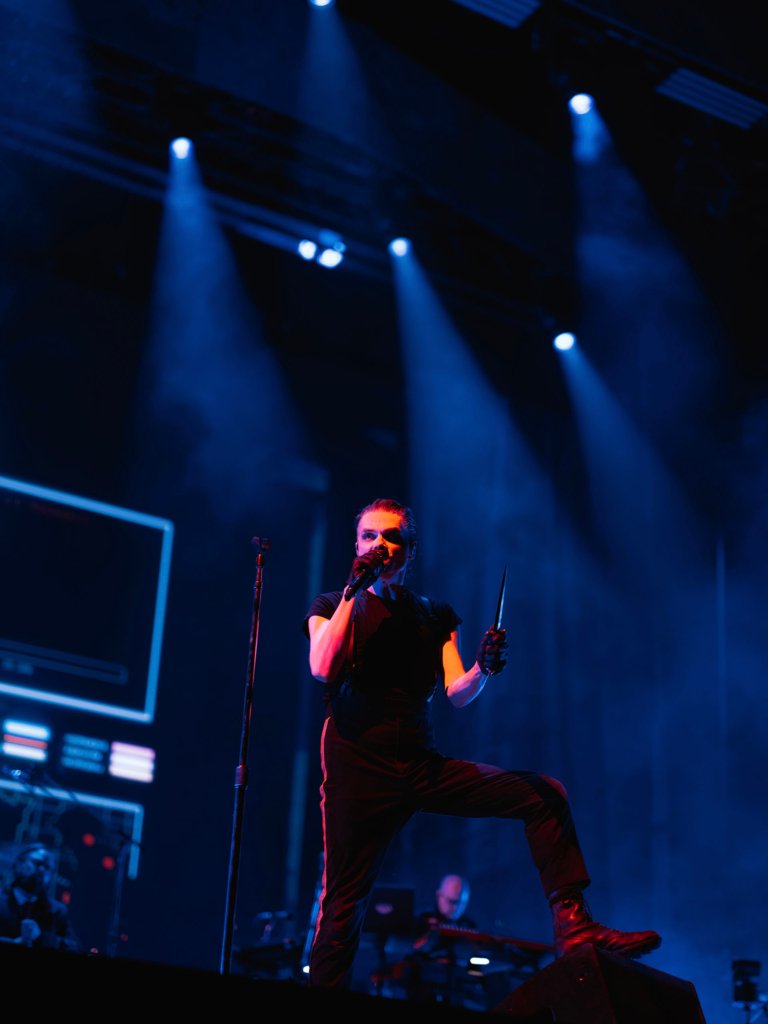
The show opened with Modest Mouse, who at one point jokingly referred to themselves as “the other band.” Their performance was genuinely strong, even if much of the audience seemed more interested in finding their seats, grabbing refreshments, or simply waiting for the main event. Their set was also at something of a disadvantage: they were playing early, followed by a long changeover, and then had to contend with the enormous production that came afterward. Float On naturally drew a noticeable response, but the set as a whole was better than the attention it received.
Then came Vera Lynn’s, “We’ll Meet Again,” a theatrical cue that both set the story in motion and gave the remaining audience members time to settle in.
From there, The Black Parade became something much larger than an album played live.
The attention to detail throughout the production was remarkable. The band members and cast remained committed to their characters, and nothing ever felt like it had accidentally wandered in from a different show. Even as the plot became increasingly dramatic, surreal, and violent, it always felt internally consistent. For a production this elaborate, that is no small accomplishment.
One of the first major pieces of the story involves a mock election. Upon entering the stadium, every attendee was given a sign with “yea” on one side and “nay” on the other. Between “Welcome to the Black Parade” and “I Don’t Love You,” four hooded, captive actors were brought onto the B-stage, introduced by Gerard Way as “contestants” or “candidates.” After a brief trivia game that the contestants inevitably failed, the audience was asked to vote on whether they should be put to death.
The audience voted.
The result – in perhaps the most the most astute political allegory of the night – doesn’t necessarily matter.
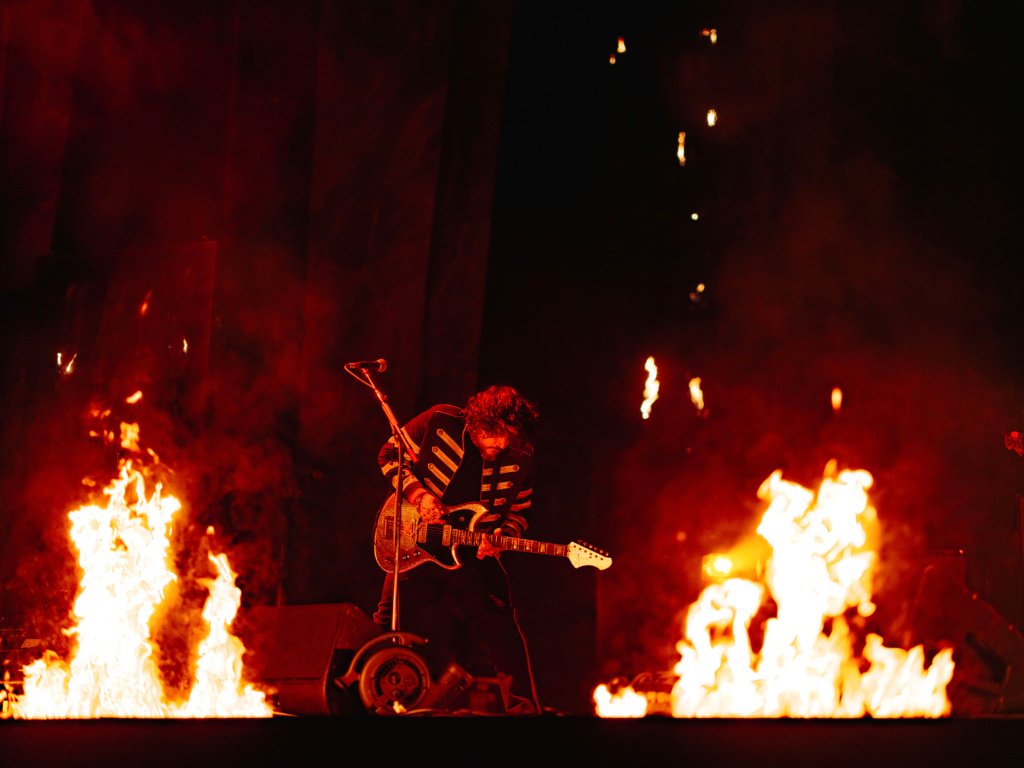
I won’t go much further into the plot because the show is considerably more fun when you don’t know what’s coming. There are moments when the production trusts the audience to understand what is happening without spelling it out, and moments when the visual storytelling does the work entirely on its own. During “Mama,” for example, an actor suddenly darts across the stage with his clothing on fire. Fans who have followed the lore of the show through previous dates may have known it was coming. For someone walking into the story relatively fresh, it was a genuinely thrilling surprise.
“Teenagers” provided one of the night’s simplest but most effective moments: 40,000 people singing along while the fictional citizens of Draag begin to become more aware of their own circumstances. During one sequence, the characters begin breaking out of their rigid roles, only for that rebellion to be met with the machinery of the state. The production’s use of screens and live performance during these moments made the story feel less like something happening around the music and more like the music itself was driving the narrative.
And then there was the final act.
I won’t spoil it. I will say that the conclusion is dramatic, violent, and visually captivating, and it earns the enormous scale of the production that precedes it. The final moments feel less like the end of a concert than the closing act of a particularly ambitious rock musical.
Throughout all of this, Gerard Way’s commitment to the performance was one of the show’s greatest strengths. His theater-geek enthusiasm was apparent from beginning to end, but it never felt like he was winking at the audience or reminding us that this was all just a show. His vocal performance was flawless, but it was his willingness to completely commit to the character that sold the first half of the night.
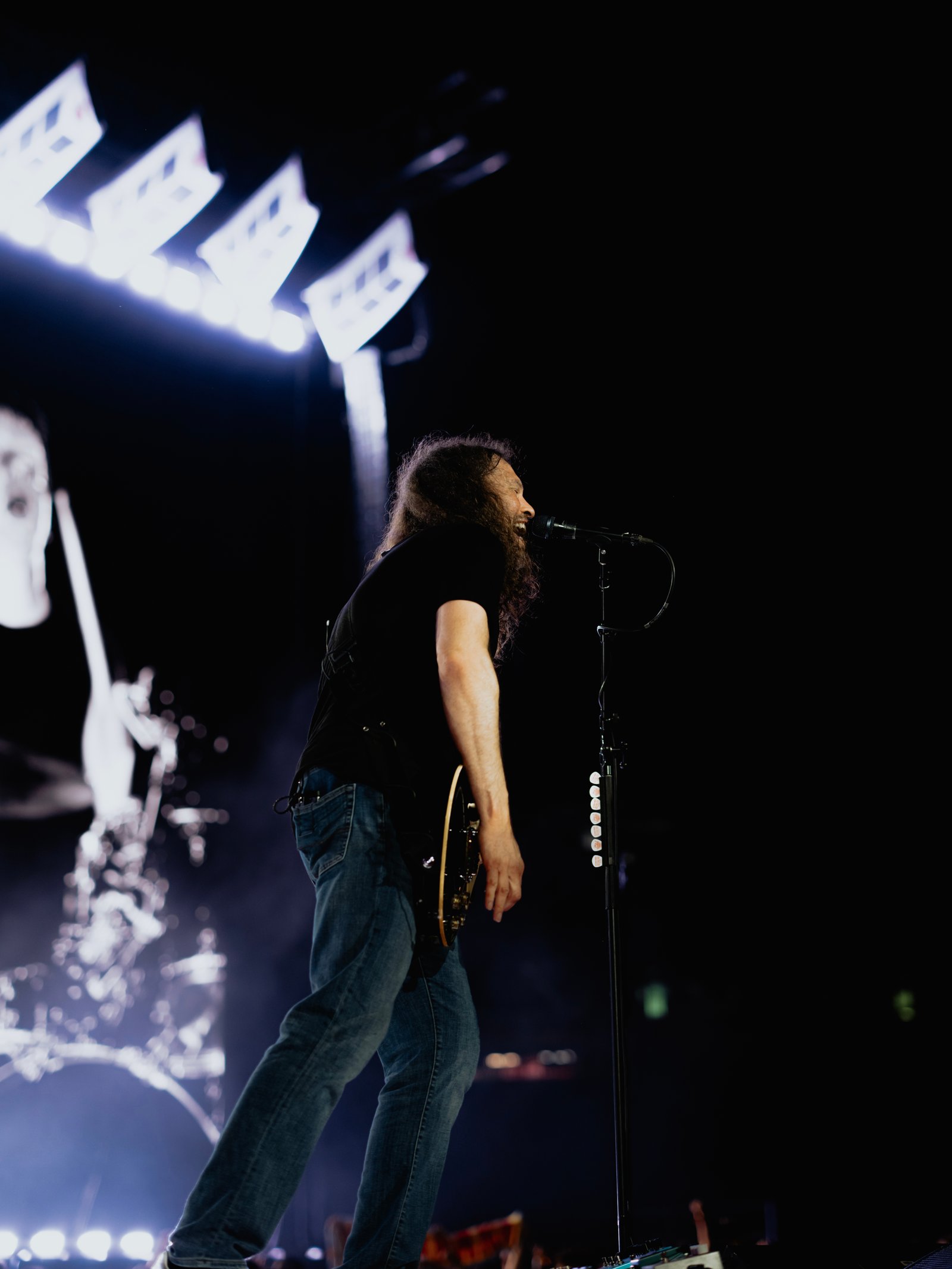
Ray Toro, meanwhile, was an absolute beast on guitar.
The contrast became especially apparent once The Black Parade concluded and the band moved to the B-stage. The characters disappeared. The rock opera was over. My Chemical Romance were, for a while, simply My Chemical Romance.
The second half featured some of the band’s best-known songs from outside The Black Parade, including “The Ghost of You,” “Helena,” “Na Na Na,” “I’m Not Okay (I Promise),” and their cover of “Desolation Row” from the Watchmen soundtrack. Gerard became considerably more talkative, occasionally wandering into the kind of slightly rambling, socially awkward banter that somehow made him even more endearing. After spending the first half of the night completely immersed in the theatrical world of Draag, seeing him switch back into something that felt much more like himself was a welcome change of pace.
It also gave him an opportunity to do something that doesn’t get enough attention at large concerts: thank the people who made the show possible.
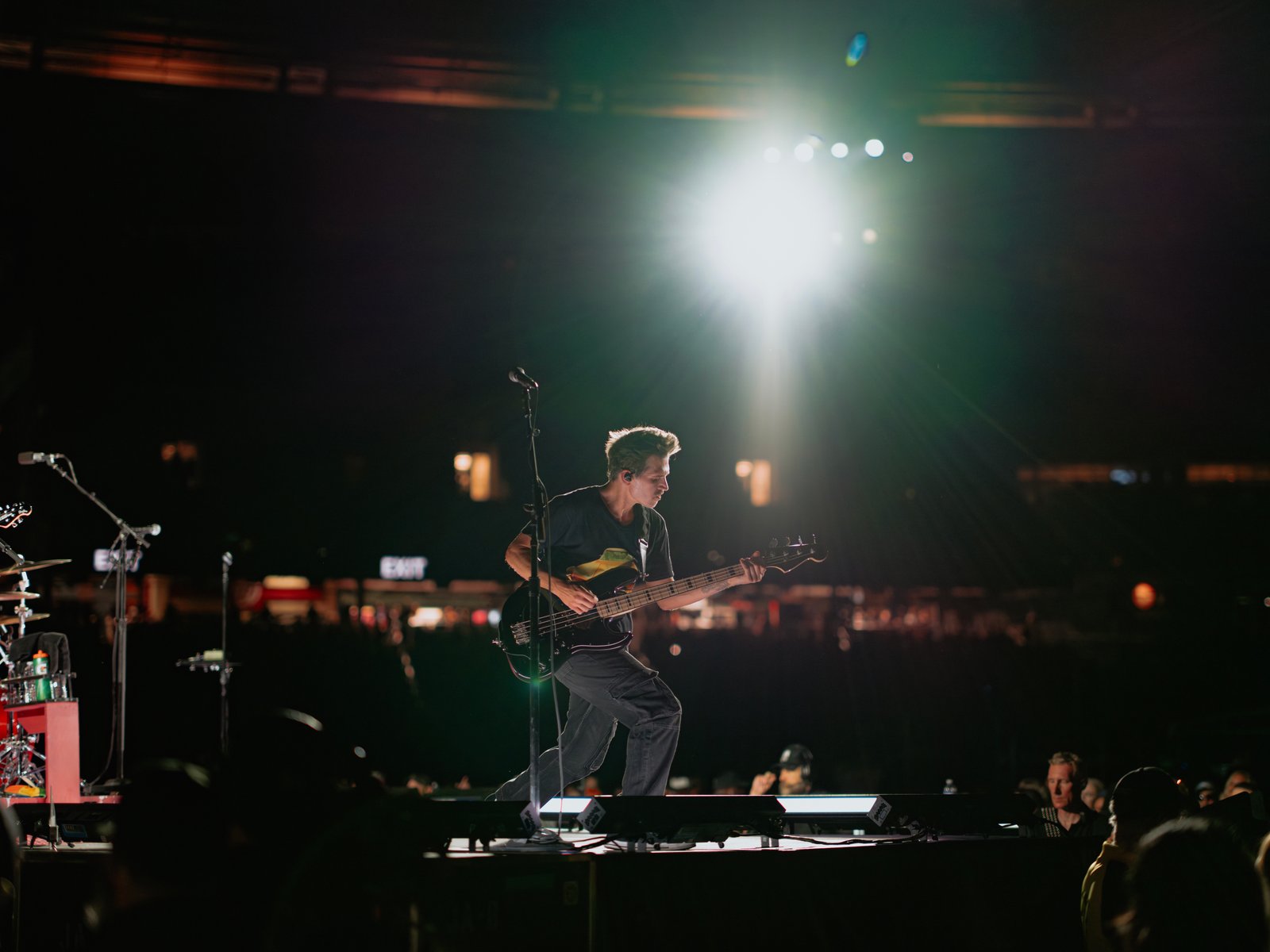
Gerard made a point of acknowledging the cast and crew, rather than simply thanking the audience and moving on. Support acts are generally the people who get named when a headliner talks about everyone involved in a show, while the enormous crew working behind the scenes can easily disappear from view. In a production as elaborate as Black Parade 2026, there is an extraordinary number of people responsible for making sure every cue, costume change, prop, lighting effect, video, piece of scenery, and musical performance happens at exactly the right moment. They deserved the recognition.
There was one song in the set that carried a weight for me that had nothing to do with the production itself.
“Cancer” has always been a difficult song for me. I had a brother who died from cancer, and seeing the song performed live was an unexpectedly powerful moment. Sometimes a song that you’ve heard countless times becomes something entirely different when you’re standing in a stadium with tens of thousands of other people and suddenly hearing it in person.
The sheer sense of community throughout the audience was another unexpected highlight. Concert audiences dress up, of course, but there was something different about seeing people arrive specifically as characters from the world My Chemical Romance had created. Some costumes were simple; others were incredibly elaborate. I saw representations of multiple Black Parade characters, alongside countless people in black button-downs and red ties, or private school uniforms reminiscent of earlier eras of the band’s history.
It felt less like an audience and more like a community of outcasts who had all agreed to show up in the same place.
That’s perhaps what surprised me most about the night. I expected a My Chemical Romance concert. I did not necessarily expect to be completely absorbed by the world they had built.
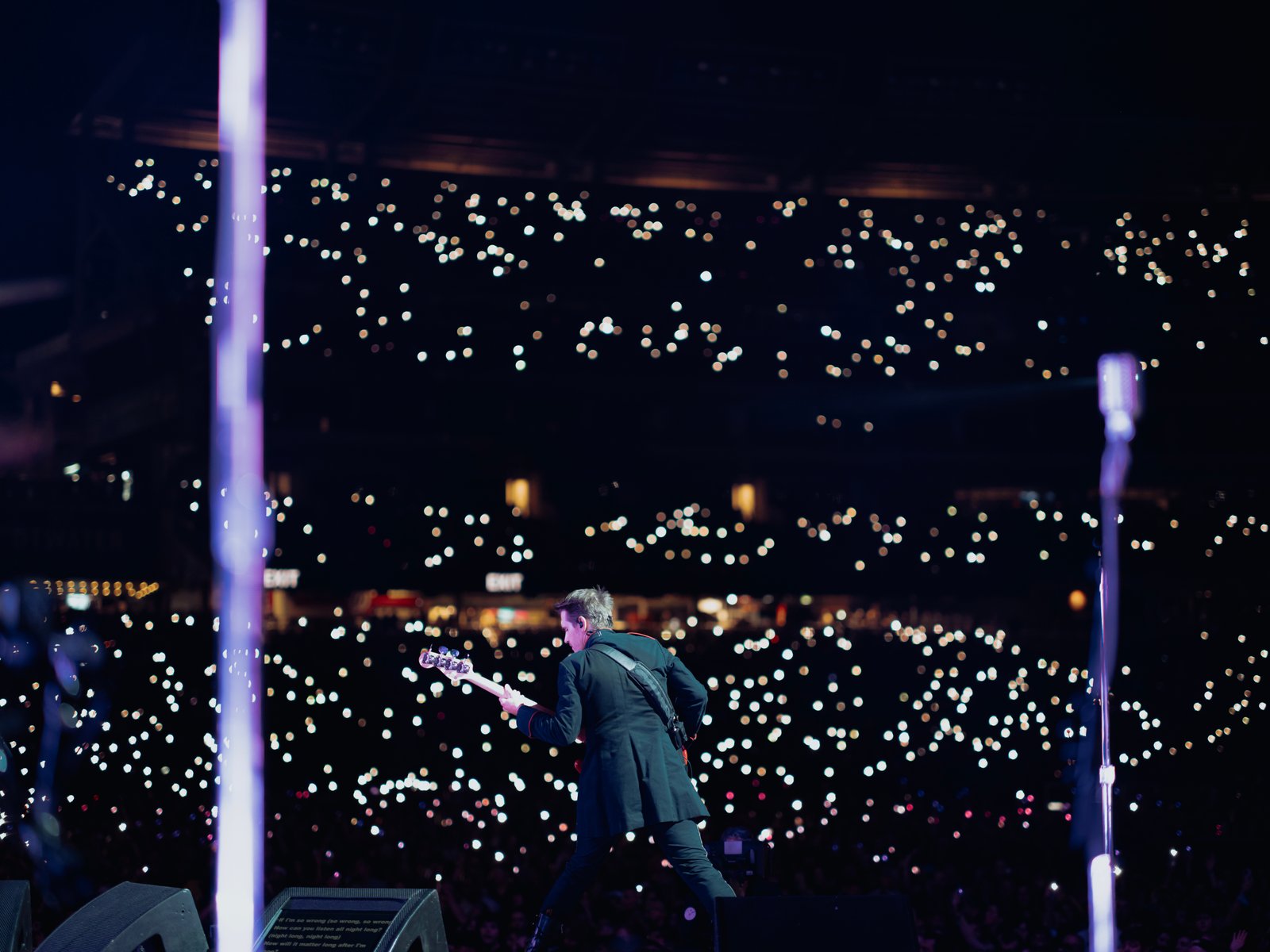
There are a few small things that could have been better. The production uses a mixture of real Cyrillic letters and invented ones in its fictional Draag writing. As someone who recognizes Cyrillic characters, I found my brain constantly trying to pronounce words that looked like they should mean something, only to realize they were nonsense. It’s a very minor gripe, but I imagine it could be even more distracting for audience members who actually read a Cyrillic-based language natively.
And, for those with light sensitivity, the strobe effects are intense. The occasional explosive “gunfire” effects also came with considerably more impact than you might expect from a concert, and a little advance warning would have been appreciated.
Those are small complaints, though, particularly considering how much the production gets right.
I went into Nationals Park knowing relatively little about Black Parade 2026 and with no particular expectation that a My Chemical Romance show would convert me into a bigger fan. Instead, I walked away thoroughly impressed—not simply by the band’s musicianship, but by the sheer commitment to the world they created.
Black Parade 2026 isn’t just an album performed on a stage. It’s a story, a political allegory, a rock opera, and, occasionally, a very large and very strange piece of theater. Most importantly, it never feels like it’s trying too hard to convince you that it is any of those things.
It simply commits to the bit.
Leave a Reply